
Written by: Blake Etringer

For much of her life, 3L Aeja (애자) Pinto felt pulled between two worlds.
One was medicine and scientific research, where she could draw on her interest in health care to help others. The other was law, where she could use her talent for writing and problem-solving to tackle complex issues.
It took a corporate counsel field placement with University of Iowa Health Care (UIHC) during her 2L spring semester to show Pinto that she did not have to choose between the two.
“This externship proved to me that a world and career existed where all the things I loved and was passionate about culminated,” Pinto said. “To me, that was groundbreaking, and I finally felt as if I was whole and there was no part of what I loved that I had to forsake.”
Long before that realization at Iowa Law, Pinto’s experiences had already begun shaping the kind of work she wanted to pursue and the impact she hoped to make.
From medicine to law
Pinto’s interest in health care became especially personal during her second year of undergrad, when her mother was diagnosed with stage 1 breast cancer.
“She was terrified,” Pinto said. “When this happened, I saw the turmoil my mother went through and began to think I wanted a career in medicine to help ease the pain others went through.”
That experience deepened Pinto’s interest in health care and research. During her undergraduate career, she conducted research at the University of Florida’s McKnight Brain Institute, volunteered in pediatric intensive care units at the University of Florida Health Shands Hospital, and served in various roles, including as president, of Dream Team Engineering—a student-run startup organization that creates biomedical devices and novel technologies to enhance the lives of the patients at UF Health Shands, the surrounding community, and beyond.
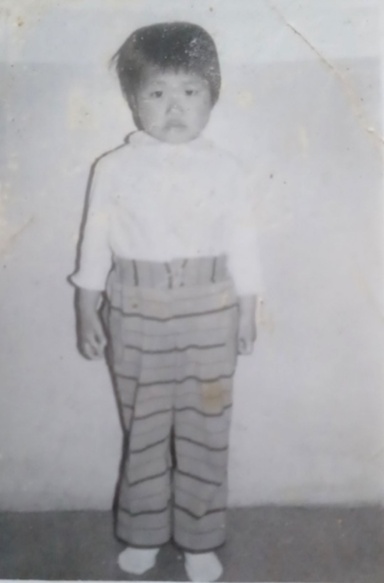
The work was especially meaningful for Pinto, whose mother immigrated to the U.S. from South Korea after being adopted at about five years of age, suffering from kwashiorkor—an enlarged stomach from malnutrition.
“I could see my mother in the people I volunteered with and the research I conducted,” Pinto reflected. “I began to see her in everything.”
After graduating from the University of Florida in 2022, Pinto took two gap years, spending one conducting research at the National Institute of Health’s National Institute on Aging and another working at a law firm in Maryland.
Her time at the firm helped clarify which path she wanted to pursue.
“I was always drawn to a career in medicine by its intensity and the profound privilege of caring for others,” Pinto said. “Yet, I eventually recognized that I could make an equally meaningful impact by leaning into my natural aptitude for writing.”
At the firm, Pinto was drawn to the intellectual rigor of the work, the dedication of the attorneys, and the ability of legal writing to solve complex problems.
“While my appreciation for medicine and research has not faded, law ultimately felt right,” she said.
When she began applying to law schools, Pinto intentionally looked beyond her home region of South Florida, seeking to branch out and experience a different location. She applied primarily to schools along the East Coast, with Iowa Law as her only school outside the region.
“I applied to Iowa because of the amazing job opportunities and bar passage rankings they provided,” Pinto said. “In addition, I received a full-tuition fellowship, and as a first-generation college graduate and soon-to-be law graduate, having that level of funding was so important and meaningful to me.”
Discovering litigation through a UIHC field placement
Pinto’s health care background made the UIHC field placement a natural fit, but the experience ultimately gave her something she did not expect: a newfound interest in litigation.
Prior to her externship, Pinto assumed she would pursue transactional law, which she had enjoyed working in before law school and during a 1L internship. She had also never seen herself as a litigator due to her introverted nature.
That all changed when she joined the UIHC legal team for a week-long medical malpractice trial in Des Moines—Pinto's first time inside a courtroom for an in-person trial.
“I was excited but also nervous at the start, but my nerves quickly evaporated,” Pinto said. “The team immediately looped me into every meeting and conversation, sought my opinions on things, and genuinely listened and incorporated my ideas. I felt that I was actively contributing to the case, which was a very cool feeling.”
The courtroom experience gave her opportunities to observe how experienced attorneys approach litigation and to participate directly in the process.
“I got the ‘litigation bug,’” Pinto said. “I really enjoyed the process of things—the strategy, the formula, the arguing, and the pursuit of justice through the court system.”
The experience also taught Pinto that her quiet nature was not as incompatible with litigation as she originally assumed.
“I learned that my ability to work in silence has sharpened my listening skills, which helps me a lot in forming arguments and noticing things other people might overlook,” she said.
Pushing beyond her comfort zone
Inspired by the attorneys she observed during the trial, Pinto decided to challenge herself further. She enrolled in a negotiation theory intersession course, despite having previously felt uncomfortable with the verbal communication and public-facing aspects of litigation.
The decision paid off—she not only finished first in the class but also received the Dean’s Award for Academic Excellence. For Pinto, the award represented far more than academic achievement.
“Receiving an award in a class completely outside my comfort zone quieted my self-doubt and confirmed that I am smart and capable,” she said.
The accomplishment was especially meaningful because of what it represented to her mother. Pinto’s mother never attended college and, Pinto believes, sometimes doubts how intelligent she is. Pinto sees her own accomplishments as deeply connected to the woman who raised her.
“As I have grown up, I have realized that my accomplishments are so much more than me; they hold up a mirror to her,” Pinto said. “She sees my intelligence and drive as proof of what she is capable of.”
That perspective has shaped the way Pinto thinks about her education and future career.
In her personal statement for Iowa Law, she wrote, “More than anything, I believe a strong attorney looks a lot like a scientist—attention to small details, flexibility, persistence, and determination. Mostly, I believe that a great attorney bears a strong resemblance to my mother.”
Her mother’s persistence, determination, and strength, Pinto wrote, have shaped both the person she is and the attributes she will bring to her legal career.
A future at the intersection of law and health care
After spending years conducting scientific research, working with biomedical technology, volunteering in pediatric health care settings, and studying law, Pinto’s field placement with UIHC finally exposed her to a potential career at the confluence of her two passions.
“My externship was the most rewarding experience I have had at Iowa Law,” Pinto said. “I met amazing mentors that I still talk to regularly and learned so much about myself in terms of my career goals and my capabilities.”
More than anything, the field placement gave Pinto confidence that her background in science and health care was not something she had left behind when she entered law school. Instead, it could become an important part of the lawyer she is becoming.
“All the skills I gained from it translate so well to both sides of the coin.”