Written by: Blake Etringer
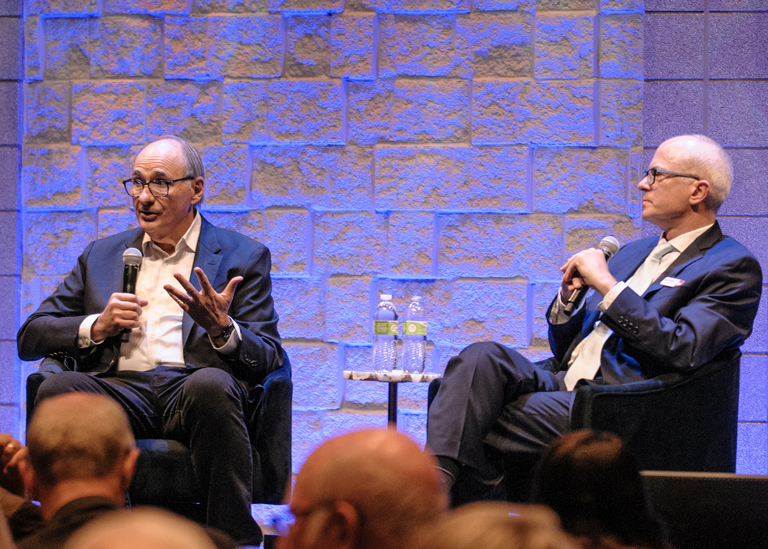
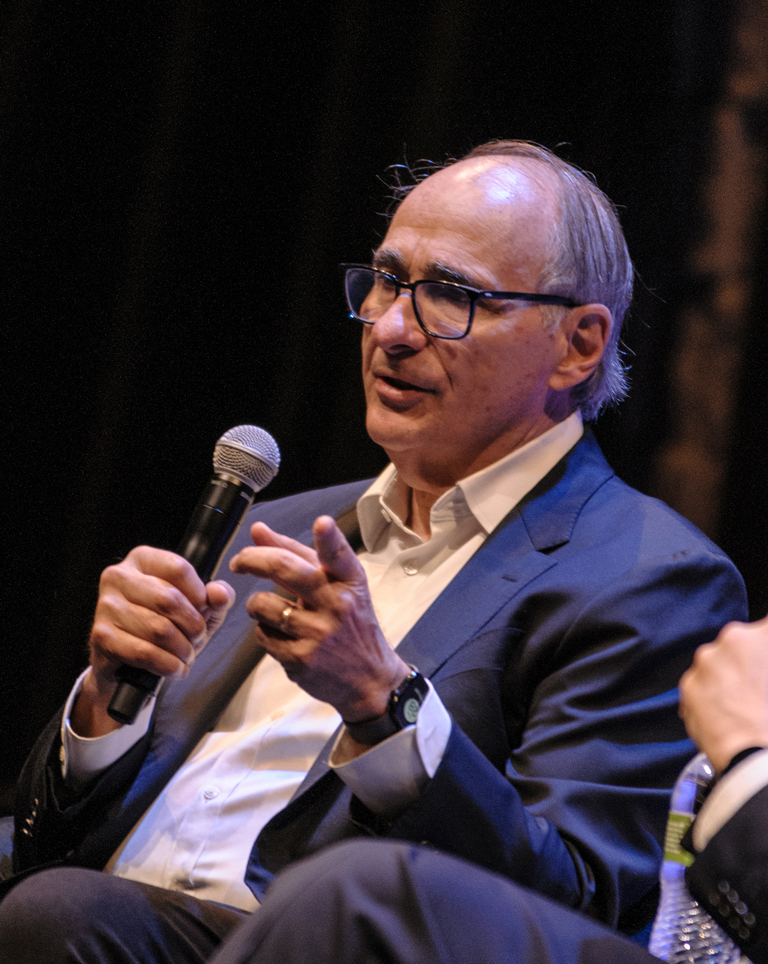
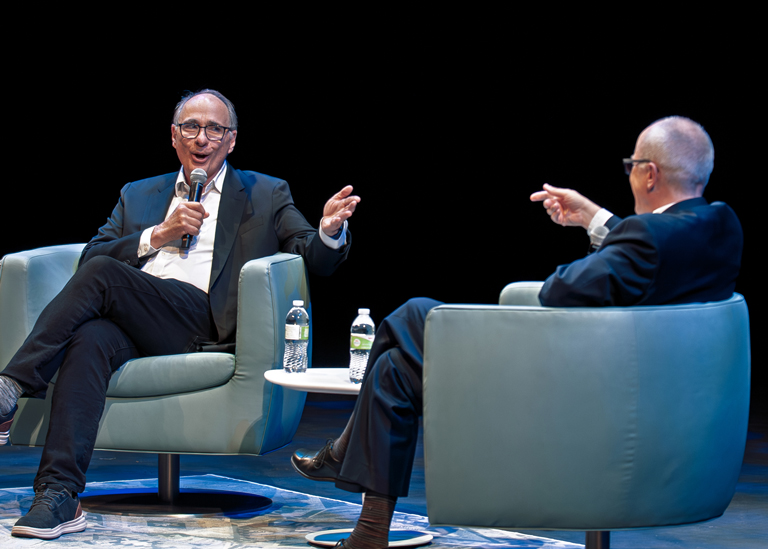
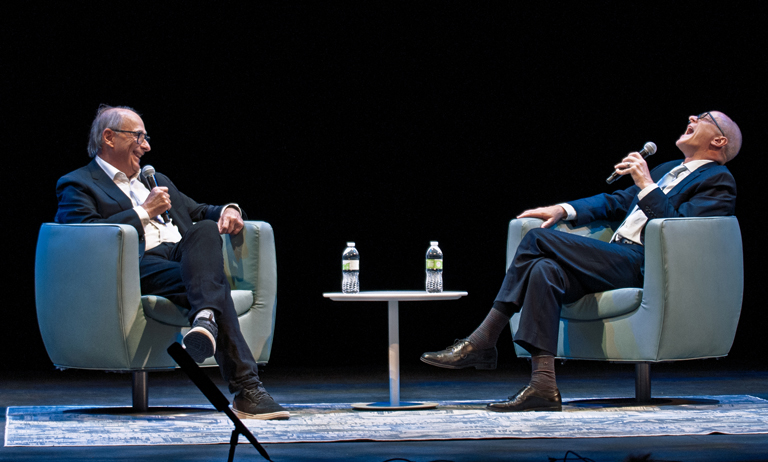
David Axelrod, former chief strategist and senior advisor to President Barack Obama, spoke at Hancher Auditorium on April 26 as the Spring 2026 Levitt Lecture speaker.
Levitt Lectures are a series of conservations with highly distinguished speakers organized by the University of Iowa College of Law and funded by a generous gift from the Levitt family.
Widely credited with helping engineer Obama’s rise to the presidency, Axelrod later served as a senior advisor to the president. After leaving the White House, he founded the Institute of Politics at the University of Chicago, where he continues to shape conversations around civic engagement and public leadership.
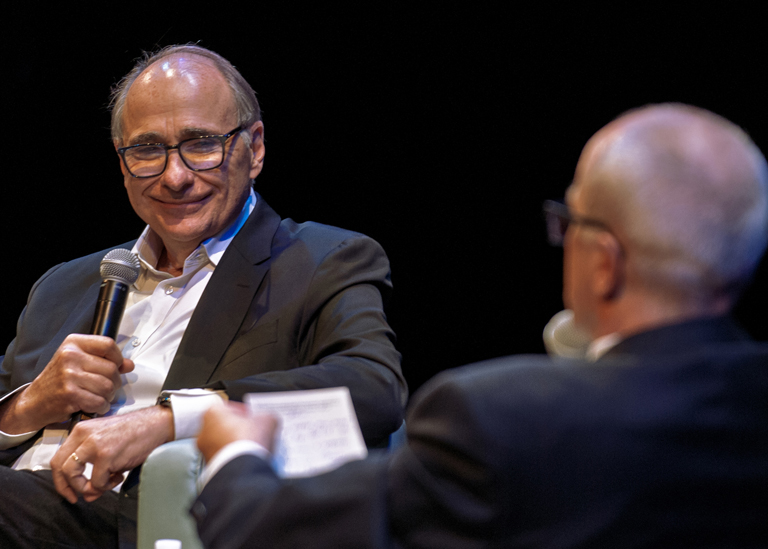
During his talk in Iowa City, Axelrod addressed a wide range of topics, including the current political climate, the role of social media, and the future of American democracy, before a sold-out audience. He was joined on stage by Iowa Public Radio’s River to River host, Ben Kieffer, who moderated the conversation.
In reflecting on the current political atmosphere, Axelrod described it as “very tumultuous,” citing rapid technological change as a driving force behind both economic disruption and shifts in communication. He emphasized the role of social media, calling it “the most concerning thing” about modern society. While it was intended to foster connection, Axelrod says social media platforms tend to amplify anger and outrage more than social cohesion.
“We’re more connected than we’ve ever been, and yet we’ve never been lonelier,” he said, noting that these digital environments often reinforce existing beliefs while isolating users from opposing viewpoints.
Despite these tensions, Axelrod expressed optimism about the future, predicting that the 2028 election cycle could represent a “reset” moment in which voters seek leaders defined by character, empathy, humility, and integrity.
Throughout the conversation, Axelrod returned to the idea that voters tend to reject continuity in favor of change. “People don’t choose a replica of what they had; they choose the remedy,” he said, suggesting that future candidates will be evaluated not only on policy positions but on their ability to unify and inspire trust.
In a more personal moment, Axelrod reflected on his role in shaping the Affordable Care Act. He shared how his family’s struggles with insurance coverage during his daughter’s serious illness influenced his commitment to health care reform. Recalling the bill’s passage, Axelrod described becoming emotional as he thought about families facing similar challenges, emphasizing the importance of pursuing meaningful policy over short-term political gain.
Axelrod closed on a hopeful note, expressing confidence in the country’s ability to produce transformational leadership when it is most needed.
“The genius of America is that we’ve managed to produce those leaders when we need them,” he said. “My hope is that someone will emerge.”
Additional highlights from the lecture can be found by listening to the May 1 episode of IPR’s River to River.